RAW CACAO BASED SUPPLEMENTS · FORMULATED IN HAWAIʻI ·

Living Synergy LLC

For three thousand years, emperors, warriors and royal courts drank cacao for how it made them feel. Then industry turned it into candy. Raw, non-fermented, non-roasted and cold-processed, Living Synergy brings back what the chocolate industry stripped away.

Shop the formulas

Raw cacao, Never fermented, Never roasted, Cold-processed, Formulated in Hawaiʻi, Lab tested, Vegan capsules

Three formulas, three ways to feel raw cacao

Cacao LifetimeLongevity™ with D3 + K2 — 60 Capsules

Cacao LifetimeLongevity™ with D3 + K2 — 60 Capsules

Cacao LifetimeLongevity™ with D3 + K2 — 60 Capsules

$30.00
Sale price  $30.00 Regular price 
Theobromine Warrior™ — 60 Capsules

Theobromine Warrior™ — 60 Capsules

Theobromine Warrior™ — 60 Capsules

$30.00
Sale price  $30.00 Regular price 
Cacao Polyphenomenal™ — 30 Capsules

Cacao Polyphenomenal™ — 30 Capsules

Cacao Polyphenomenal™ — 30 Capsules

$30.00
Sale price  $30.00 Regular price 

Real photos · real trees

Where Cacao’s Chemistry Begins

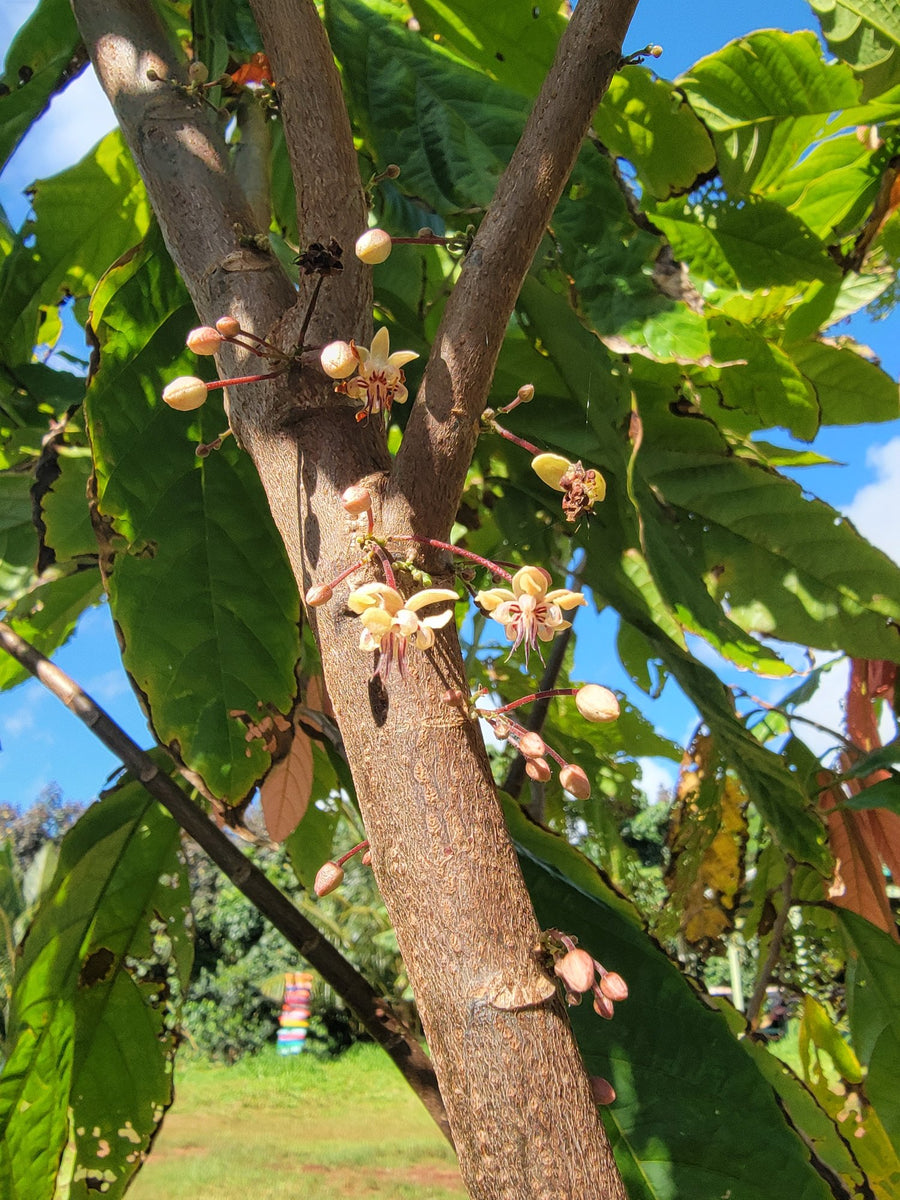
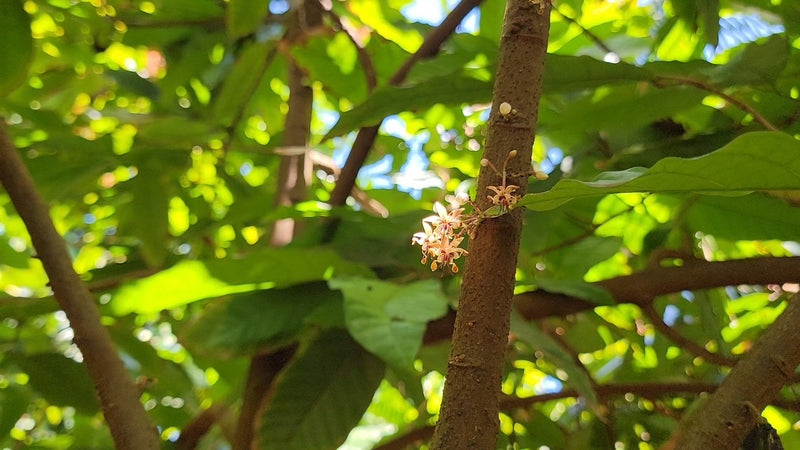
Long before cacao becomes chocolate, or finds its way into a capsule, its story begins with a delicate flower growing directly from the trunk of Theobroma cacao.

Once pollinated, the flower begins an extraordinary transformation. What first appears as a tiny blossom gradually develops into a mature cacao pod, while the plant directs energy into the formation of its seeds, fruit pulp, pigments, and complex botanical chemistry.

Within the developing seed, the cacao tree synthesizes and accumulates a remarkable spectrum of naturally occurring compounds. More than 380 chemical compounds have been identified in cacao, including flavanols, polyphenols, proanthocyanidins, and methylxanthines such as theobromine.

Inside the mature pod, these seeds rest within a sweet, white fruit pulp known as cacao mucilage. Beneath this coating, on most varieties, the raw seed reveals a vivid purple interior. A visual expression of the plant’s naturally occurring pigments and polyphenolic constituents.

This is cacao in its living raw botanical form: a seed shaped by the intricate biochemistry of the tree.

Why raw cacao matters
Raw ✦ Never fermented ✦ Never roasted
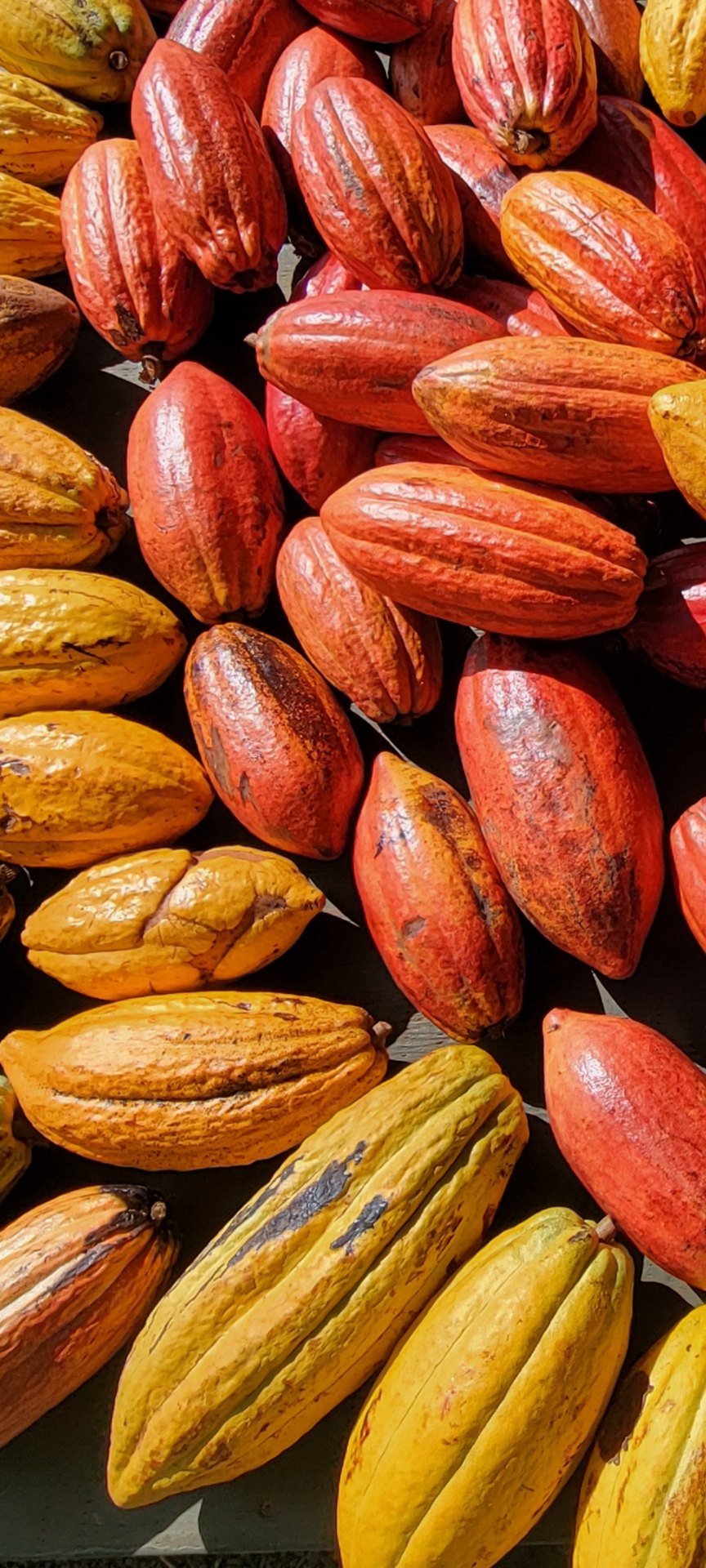
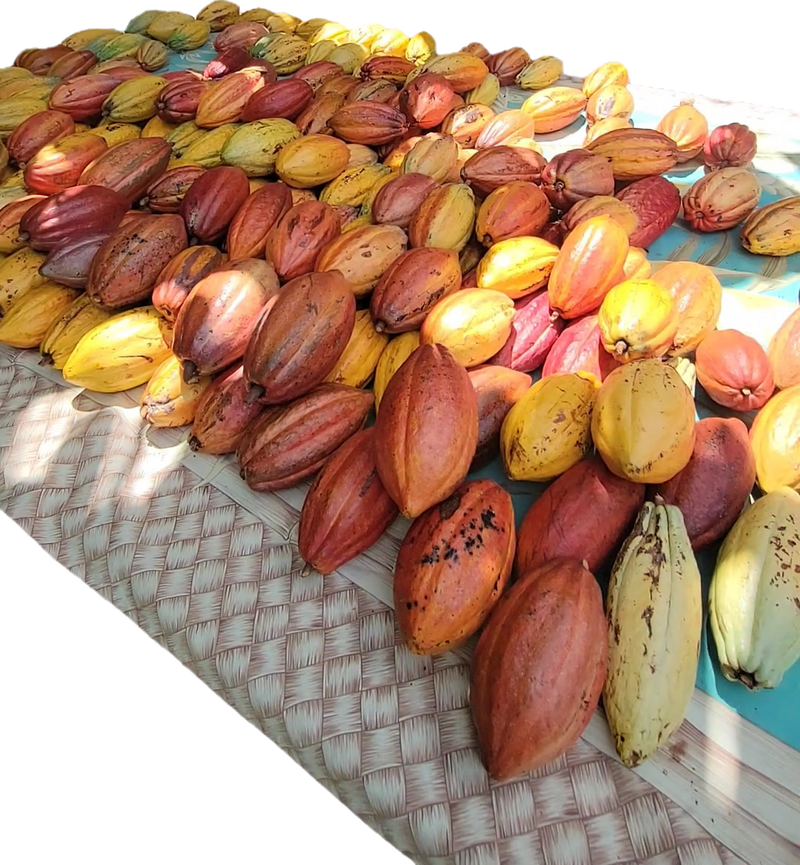
Colorful red, orange and yellow cacao pods from above
the harvest
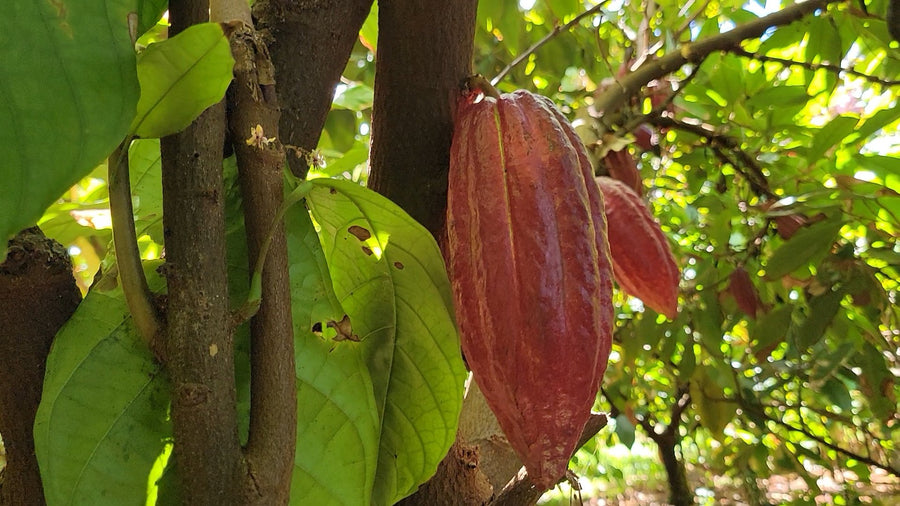
Red cacao pod ripening on the tree
ripe & ready
Cacao flowers and buds growing directly from the trunk on Kauaʻi
flowers on the trunk
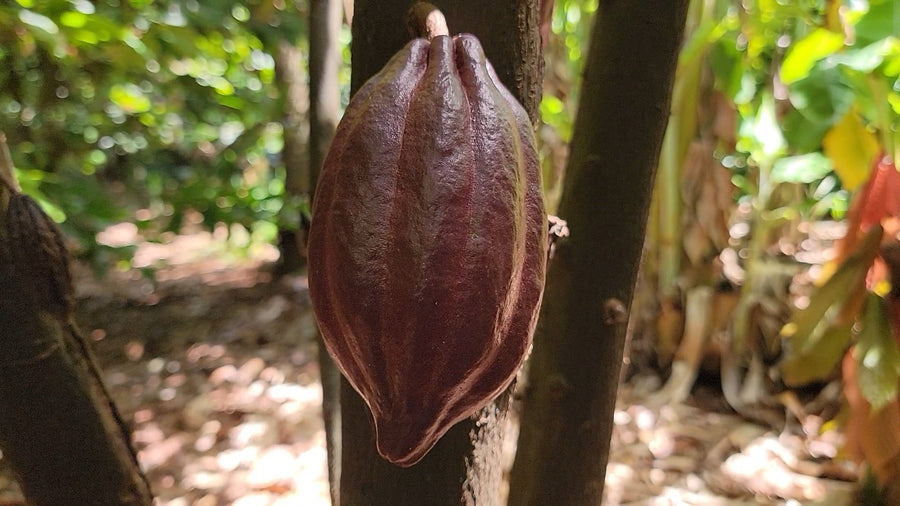
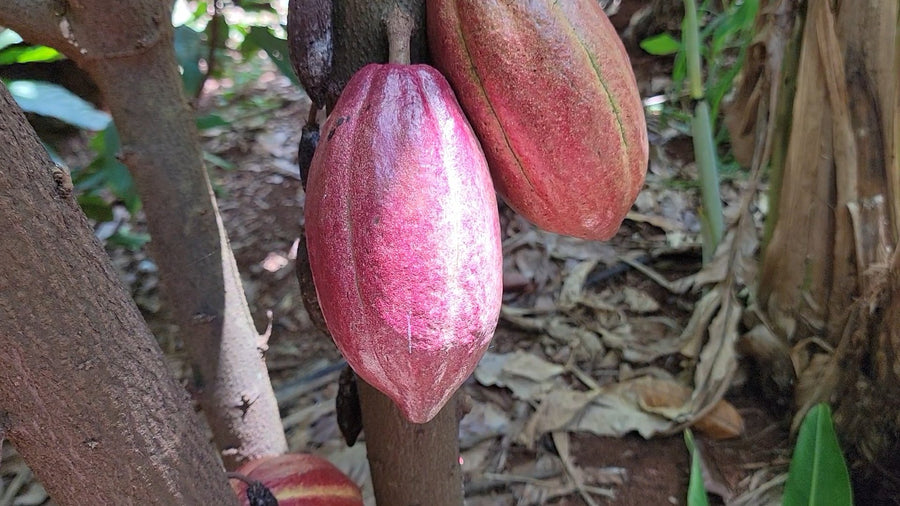
Deep purple cacao pod on the tree
purple pod
Bright pink cacao pod hanging from the trunk
sunset pod
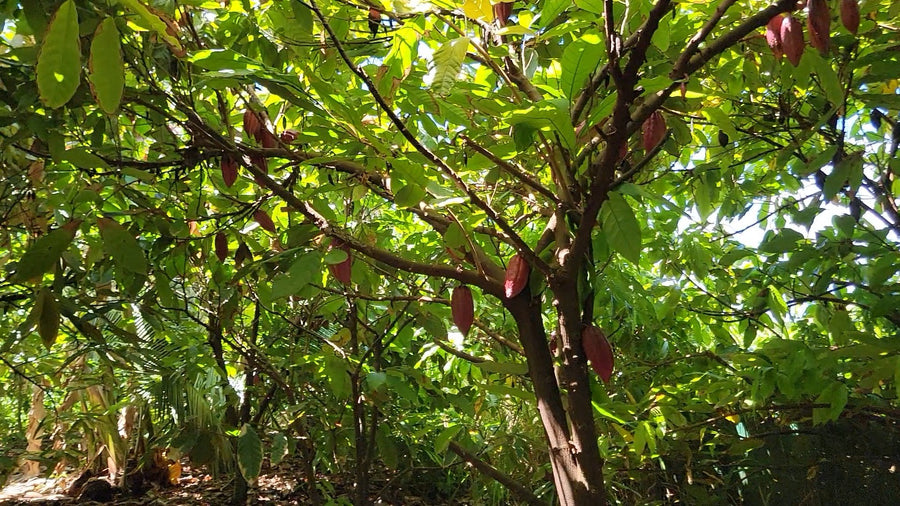
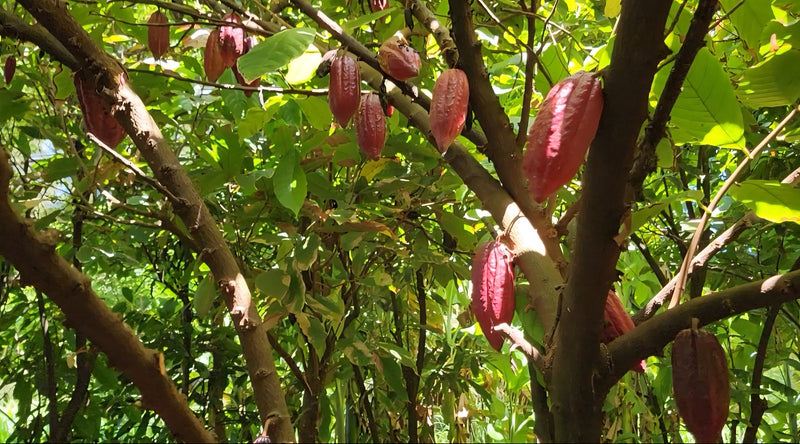
Cacao tree canopy with ripening red pods
under the canopy
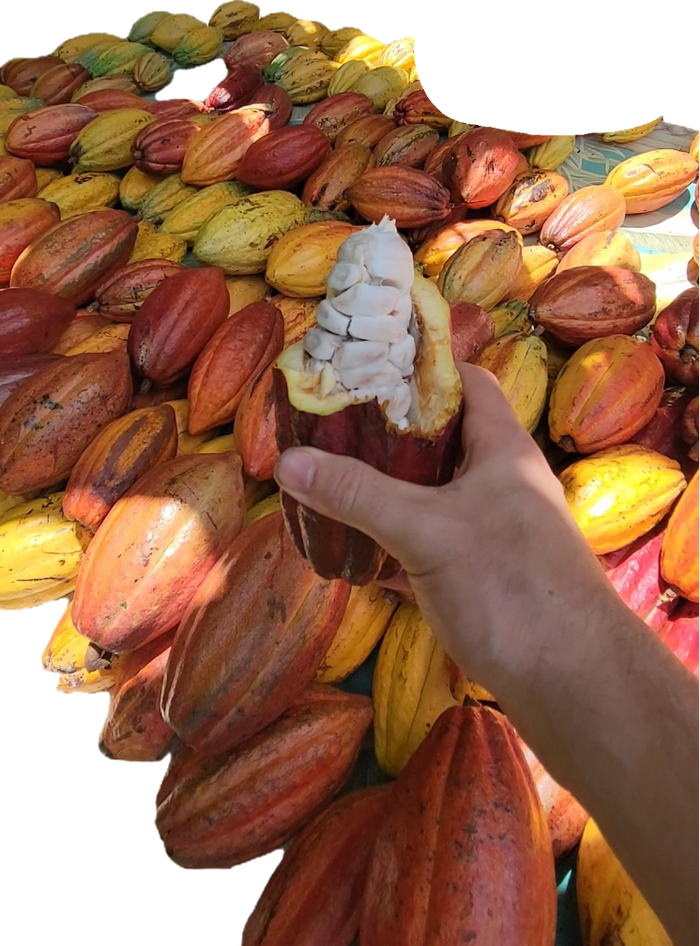
Hand holding an opened cacao pod showing white mucilage-covered seedsraw · never fermented
Freshly harvested red, orange and yellow cacao pods on a woven mat
Looking up into a cacao tree full of pods
Hand holding an opened cacao pod above a pile of colorful pods

What was lost

How cacao lost its soul

Long before it was candy, cacao was an experience. For more than three thousand years, the Olmec, Maya and Aztecs ground the seeds into a bitter, frothing drink and they prized it for what happened after the cup was empty: a surge of energy, a lift in mood, a clear and focused mind.

When Hernán Cortés and the Spanish conquistadors encountered cacao in 1519, it was not the taste that won them over. The drink was famously bitter. It was the feeling. They carried cacao home to Spain, and from there it spread through the royal courts and affluent houses of Europe, still consumed as a beverage and still valued for its energy, stamina and euphoria.

Then came the pressure to make it cheaper, more palatable. In 1828, Dutch chemist Coenraad van Houten patented a press that squeezed the fat from the seed, leaving a dry powder he then treated with alkaline salts. It was a masterpiece of industrial engineering. Harsh bitterness mellowed into a smooth, palatable flavor. Beans of different genetics and wildly different flavor profiles could be blended into one consistent product. Separating the powder from the butter meant every batch could be measured, standardized and scaled.

Within twenty years, the first solid chocolate bar was born, but the bitterness the chocolate industry engineered away was the very chemistry people had valued. The flavanols, polyphenols and methylxanthines behind cacao's felt experience are the same compounds that make it bitter, and fermentation, roasting and alkalization strip out the vast majority of them. The molecules that made people feel something were largely gone. In the name of economics, profit and industrialization, cacao lost its soul.

Since the Dutch press arrived in 1828, most of the world's chocolate has been a recombination of cocoa powder and cocoa butter — the hollow remnants of a once-sacred plant. Fermentation, high-heat roasting and alkalization were built for flavor, color, shelf life and cost, and the compounds responsible for cacao's power happen to be the same ones responsible for its bitterness. Every step that made chocolate delicious made it inert. 

Modern science is now confirming what ancient civilizations knew. Cacao flavanols and theobromine have been studied in randomized human clinical trials for blood flow, memory, cognitive performance, alertness and mood.*

Up to 80%

of cacao's flavanols can be lost during fermentation alone, before the beans ever leave the farm.

110–150 °C

roasting temperatures degrade heat-sensitive compounds and convert epicatechin into a less well-absorbed form.

Up to 89%

of the remaining flavanols lost to Dutch-process alkalization (34.6 mg/g in natural vs 3.9 mg/g heavily alkalized).

Figures: flavanol losses documented in the Journal of Agricultural and Food Chemistry (fermentation; Miller et al., alkalization of commercial cocoa powders).

Food of the gods, Flower → pod → seed → capsule, Theobromine, Flavanols, Polyphenols, Nothing roasted out

From flower to capsule

The life of a cacao seed

From the first flower on the trunk to the capsule in your hand. Swipe through the whole journey.

  1. 01
    Tiny cacao flowers on a branch under the canopy

    It starts as a flower

    Cacao is cauliflorous: its tiny flowers grow directly from the trunk and older branches, and only a small fraction ever become fruit.

  2. 02
    Cacao flowers and buds growing directly from the trunk on Kauaʻi

    Pollinated by midges

    Not bees. Tiny midges do the work, flower by flower, in the shade of the understory.

  3. 03
    Cacao tree heavy with red pods

    Pods ripen slowly

    Each pod takes roughly five to six months to ripen, shifting from green to purple, red, orange or gold.

  4. 04
    Freshly harvested red, orange and yellow cacao pods on a woven mat

    Hand-harvested

    Ripe pods are cut by hand. No two look alike, and that's the fun of it.

  5. 05
    Hand holding an opened cacao pod showing white mucilage-covered seeds

    Opened, not fermented

    Inside: raw seeds wrapped in sweet white mucilage. Nearly all the world's cacao is heaped and fermented from here, turning the purple seed brown. Ours is not.

  6. 06

    Into the capsule

    Cold-processed into raw cacao seed powder with cryogenic techniques, then paired with one partner nutrient per formula. The chemistry of the pod, carried all the way to you.

Our source

Raw cacao, the way it was meant to be

Cacao does not grow in the continental United States. It thrives only in a narrow tropical belt within about twenty degrees of the equator, Hawaiʻi is the only US state where it grows at all, in it's natural environment, and there is no major source of raw cacao anywhere in the country. For most Americans, the real thing has simply been out of reach. Living Synergy exists to bring back what was lost. Every formula is built on raw, non-fermented, non-roasted, cold-processed cacao powder, protected through cold-process and cryogenic techniques designed to preserve the polyphenols, flavanols and delicate chemistry that chocolate-making strips away, so you can experience the true power of raw cacao.

01

Raw

Whole Raw Cacao seed powder. Never dutch processed Cocoa.

02

Non-fermented

Skipping fermentation protects the flavanols that are otherwise oxidized and lost in the first week after harvest.

03

Non-roasted

No high-heat roasting, so heat-sensitive compounds keep their native, well-absorbed form.

04

Cold-processed

Low-temperature and cryogenic processing, and never alkalized.

Hanalei valley and bay on Kauaʻi

The founder's philosophy

Restoring the forgotten experience

A feeling of power that enables a man to walk all day without fatigue.

Attributed to Hernán Cortés, on first encountering cacao

To the Maya, cacao was a gift of the gods. To the Aztecs, it was medicine, a warrior's ration and even money: cacao seeds were traded as currency. When the Spanish arrived, it was not the flavor that won them over. It was the feeling. That feeling was biochemical.

Our philosophy is to restore it, not as nostalgia but as neuroscience. Where industry reduced cacao to a sugary confection, we bring it back as a functional botanical: raw, cold-processed and formulated with purpose. A synthesis of ancient wisdom and modern biochemistry, returning to you what was traded away for convenience and profit.

Find your formula

Aloha from Hawaiʻi, Shot by our founder, Real trees, real pods, Raw cacao, restored